ServicesRoof Treatments
Ballston Spa Roof Treatments
Dark streaks, green moss and crusty lichen wear down a shingle roof early. Our low-pressure treatment kills that growth at the root. We protect your plants during the work and explain plainly what you'll see over the following weeks.
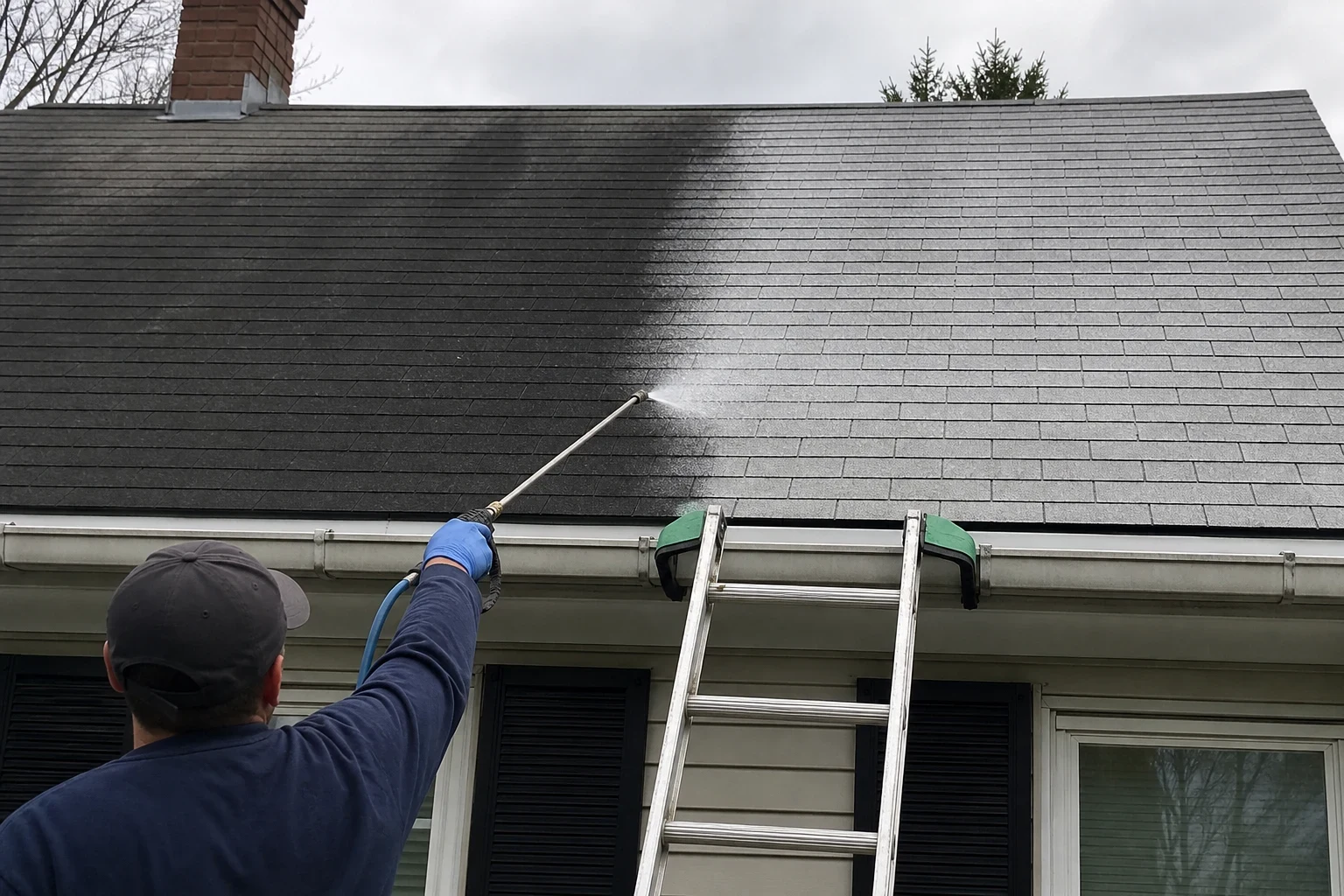
How a Roof Treatment Works
We spray a liquid treatment onto your shingles at low pressure, and it kills the algae, moss and lichen growing on them. There's no blasting. High-pressure water strips the granules that shield asphalt shingles from the sun, and that harm can't be undone.
Results build slowly. After the growth dies, rain and melting snow loosen it and carry it off. Most of the difference appears over several weeks, while thick moss may take a whole season to come loose.
A treatment makes sense when growth is spreading and the shingles are still in good shape. If they're cracked, curling or missing, we'll tell you and send you to a roofer first.
What's Included in Every Treatment
Roof check before we spray
Before any product goes on, we look over the valleys, flashing and the condition of each slope. Anything worth noting gets photographed, and you see those pictures before we start.
Plant and surface protection
We wet down shrubs and beds before and after, and cover delicate plants. Downspout areas get extra attention since that is where runoff collects.
Low-pressure application
The product goes on like a heavy rain, not a jet. We follow the product label for mix strength and coverage, which is the legal standard for how these treatments are used.
Spot work on heavy moss
Thick moss mats near the ridge or under trees get a second pass. Where loose clumps can come off by hand without lifting shingles, we remove them.
A clear what-to-expect talk
Before we leave, we tell you how the roof should look in two weeks and in two months. You will know what is normal and when to give us a call.
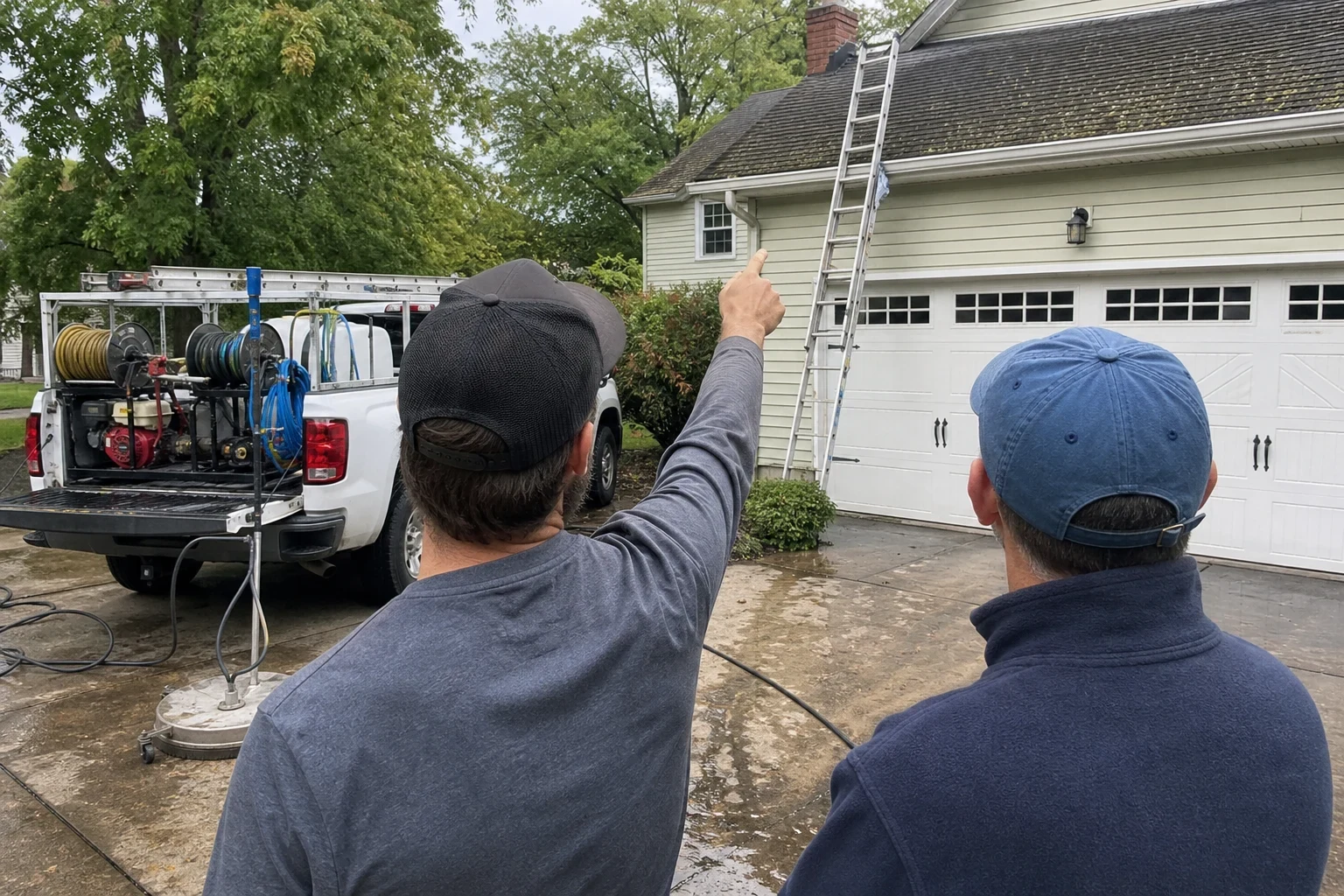
Signs Your Roof Needs a Treatment
- Dark streaks down the slope
- Those black or gray streaks are usually algae, not dirt. They feed on the limestone filler in many shingles and spread a little more each year.
- Green moss along edges and seams
- Moss holds water against the shingle. In freeze-and-thaw months that water expands and pries the shingle edges up.
- Crusty spots that look like paint
- Lichen grips hard and grows slowly. Pulling it off by hand often takes the granules with it, so it needs to be killed first.
- Growth on the shaded side only
- If the north face or the slope under a tree is covered while the sunny side is clean, the shaded side stays damp too long. That is exactly where a treatment helps most.
- Granules piling up below the roof
- Sandy grit at the bottom of downspouts can mean moss roots are working under the shingle surface. It is worth catching early.
How the Job Goes
- 1
Phone call and free quote
You call, tell us what you are seeing, and we set a time to look. We give you a quote by phone once we have seen the roof.
- 2
Check the weather and prep
We pick a dry day with no heavy rain right behind it so the treatment can soak in. On arrival we wet and cover plants and move anything fragile away from the drip line.
- 3
Apply the treatment
We work top to bottom at low pressure, giving extra coverage to moss and lichen. Most homes take a few hours. You do not need to be home, but we are glad to walk the yard with you after.
- 4
Rinse plants and walk the site
We rinse the beds again and check that nothing is left on walks or siding. Then we go over what you will see in the coming weeks.
What Moves the Price
Every roof is priced on its own. The quote comes after we have seen it, and it covers the treatment, prep and site rinse. If we see something that would change the job, we tell you before we start.
- Roof size
- More square footage takes more product and more time on the roof.
- Pitch and height
- A steep two-story roof needs more safety setup than a low ranch. Walkable roofs go faster.
- How heavy the growth is
- Light streaking takes one even pass. Thick moss and old lichen need spot work and sometimes a second visit.
- Trees and shade
- Roofs under big trees grow back faster and often have debris to clear before treatment can reach the shingles.
Roof Treatment Questions
- Is the treatment safe for my lawn and plants?
- Plants get soaked with water before and after, and fragile ones get covered, which thins out any runoff that reaches them. We also stick to the label rates and never mix stronger than the product allows.
- When will the streaks disappear?
- With ordinary rain, algae streaks tend to fade within a few weeks. Moss browns first, then lets go. Lichen is slowest and may need a season or longer to wash off completely.
- Is a permit required for a roof treatment?
- No. The treatment doesn't alter the structure, so your town won't ask for a building permit. The product label is what governs the work, and we follow it for mixing, applying and protecting your yard.
- Does the treatment damage shingles?
- No. The product is designed for asphalt shingles and lands softly, much like steady rain. Shingles usually get hurt when someone blasts them with water or scrapes growth off, because both strip the protective granules. We don't do either.
- How often does a roof need treating?
- That depends on shade and moisture. A roof in full sun can stay clean for several years. One under trees through our long, wet springs may need it sooner, and we'll be honest about what we find.
- Do you treat roofs in winter?
- We book treatments when the roof is free of snow and ice and the temperature works for the product. That usually means spring through fall.
Clear the Growth From Your Roof
Let us know what's showing up on your shingles and we'll come look. You'll get an honest answer on whether a treatment fits and what the job involves.